Archive for the Travel Category

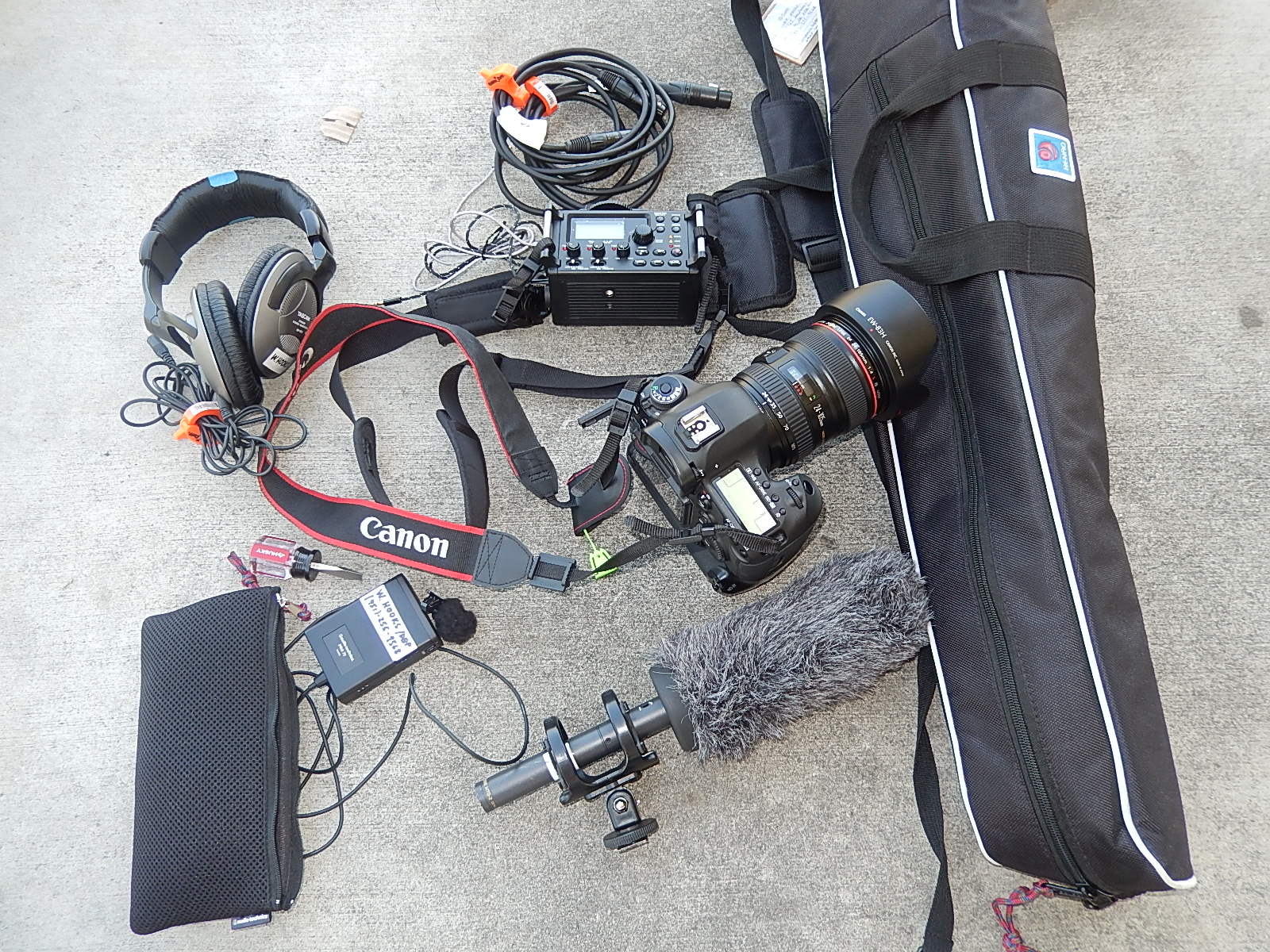
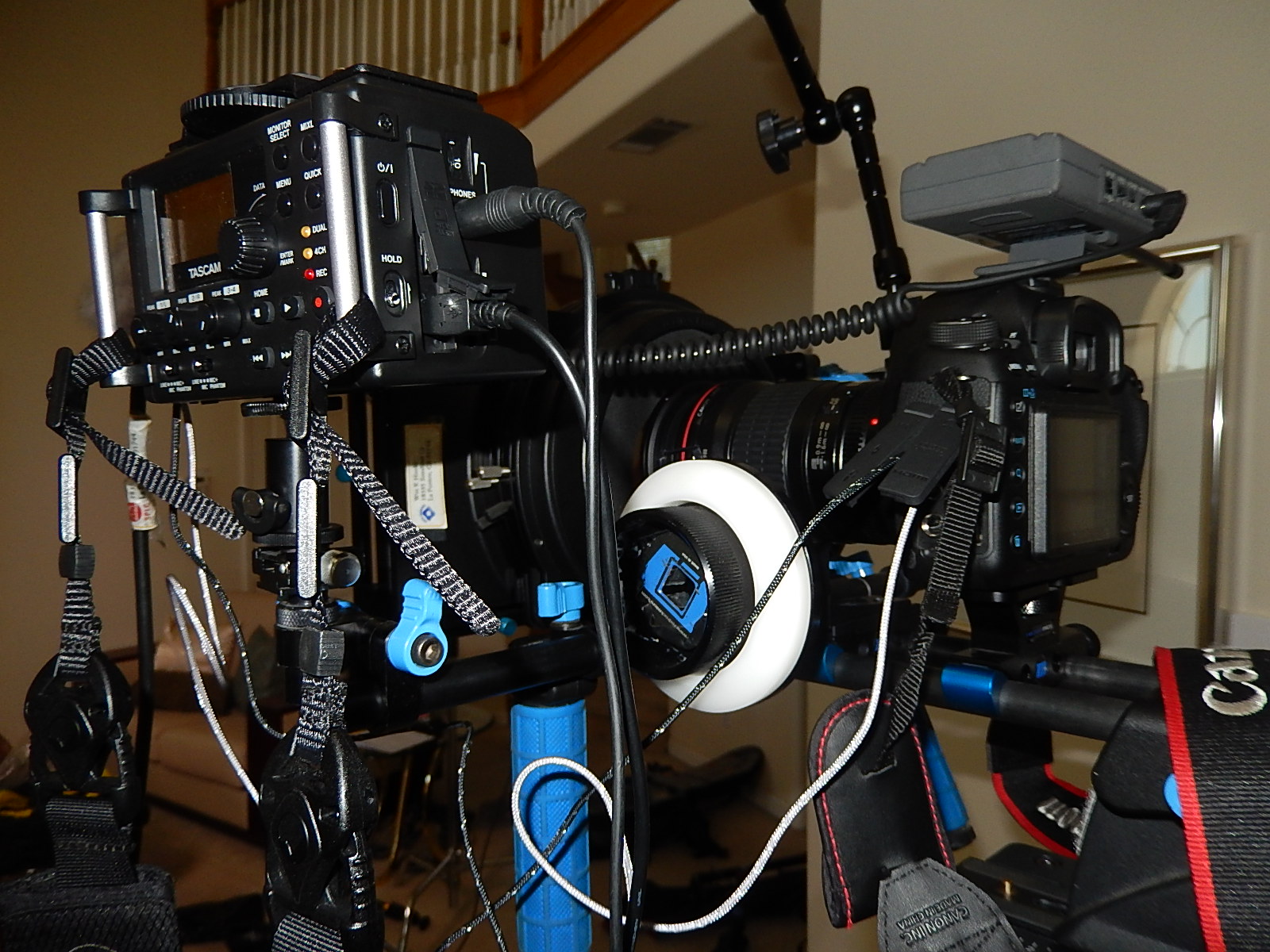
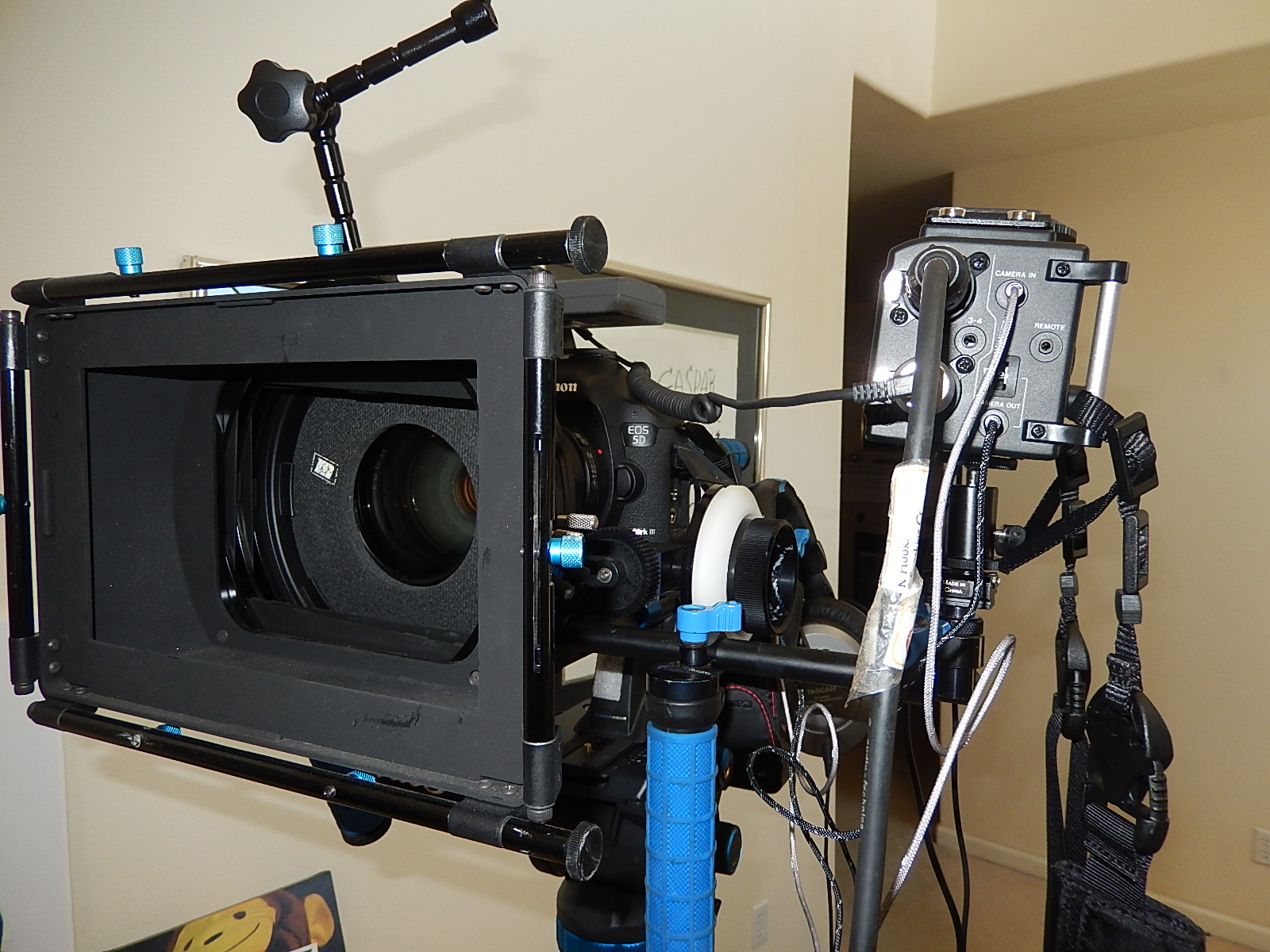
A functional, compact dual-audio ENG rig

Posted in Photography, Photojournalism, Reviews, Travel, Video with tags , , , , , , , , on June 21, 2014 by William Hooks

Canon 5D3_dual lav shotgun audio_monopod

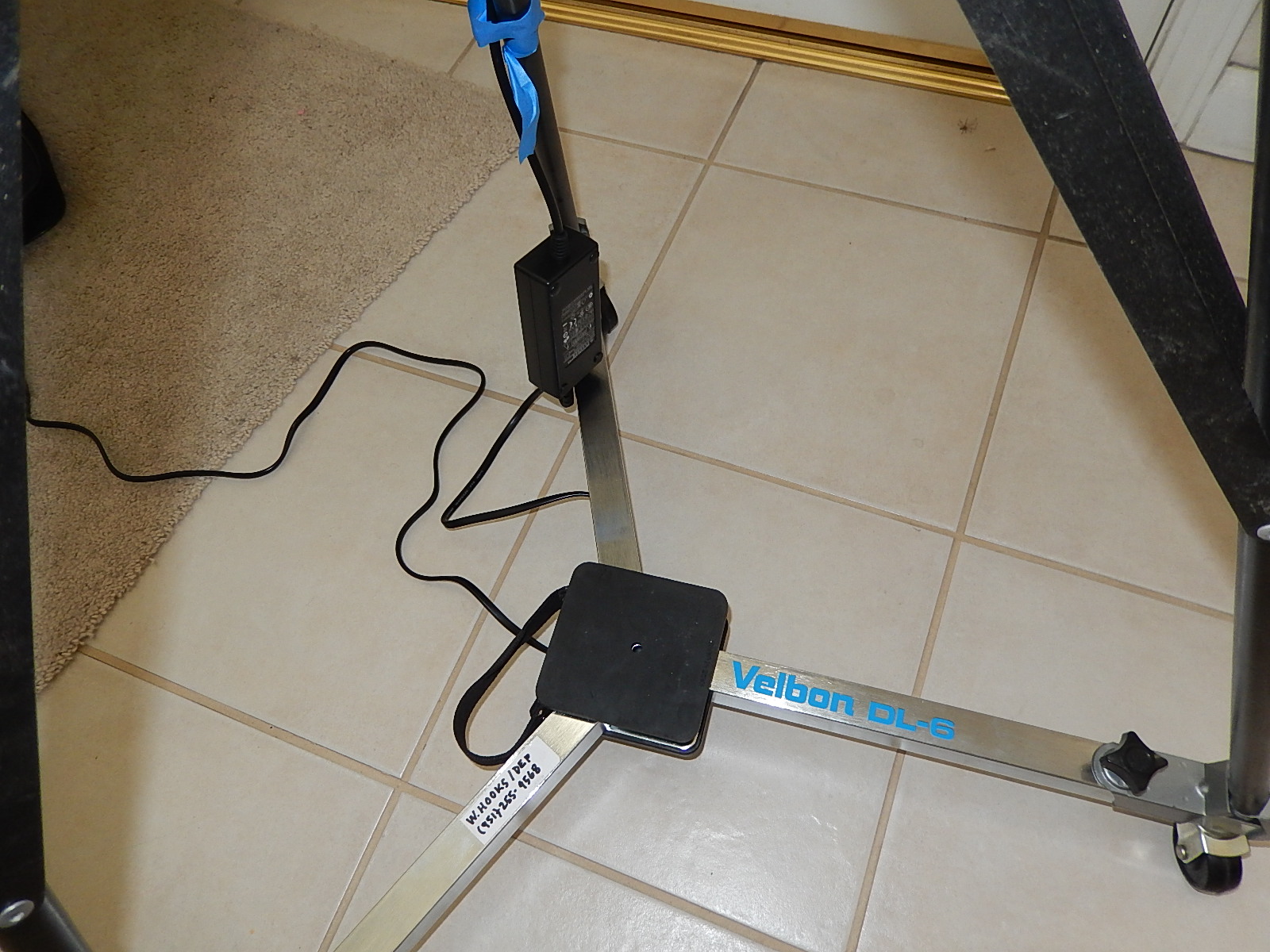
This setup works well for daylight-lit ENG; I usually add a Stellar ST-3000 LED light and a 6″ cold shoe rail when artificial light is needed.

This group fits into a Lowe Pro Flipside 400 pack and includes:

Canon5D3 w 24-105 f/4 L
Rode NTG-2 shotgun mic with deadcat and shock mount, headphones
Tascam DR-60D DAR with 2 x 3.5 mm short cables to run to and from the camera
Audio Technica Pro70 wired lav mic w dead’marble’
2 XLR cables, 6′ each
3X 3″ loupe
batteries

The Benro S6 video monopod goes into its own case to the site of the events.

Some audio setups

Posted in Music, Photojournalism, Reviews, Travel, Video with tags , , , , , , , , , , , on June 16, 2014 by William Hooks

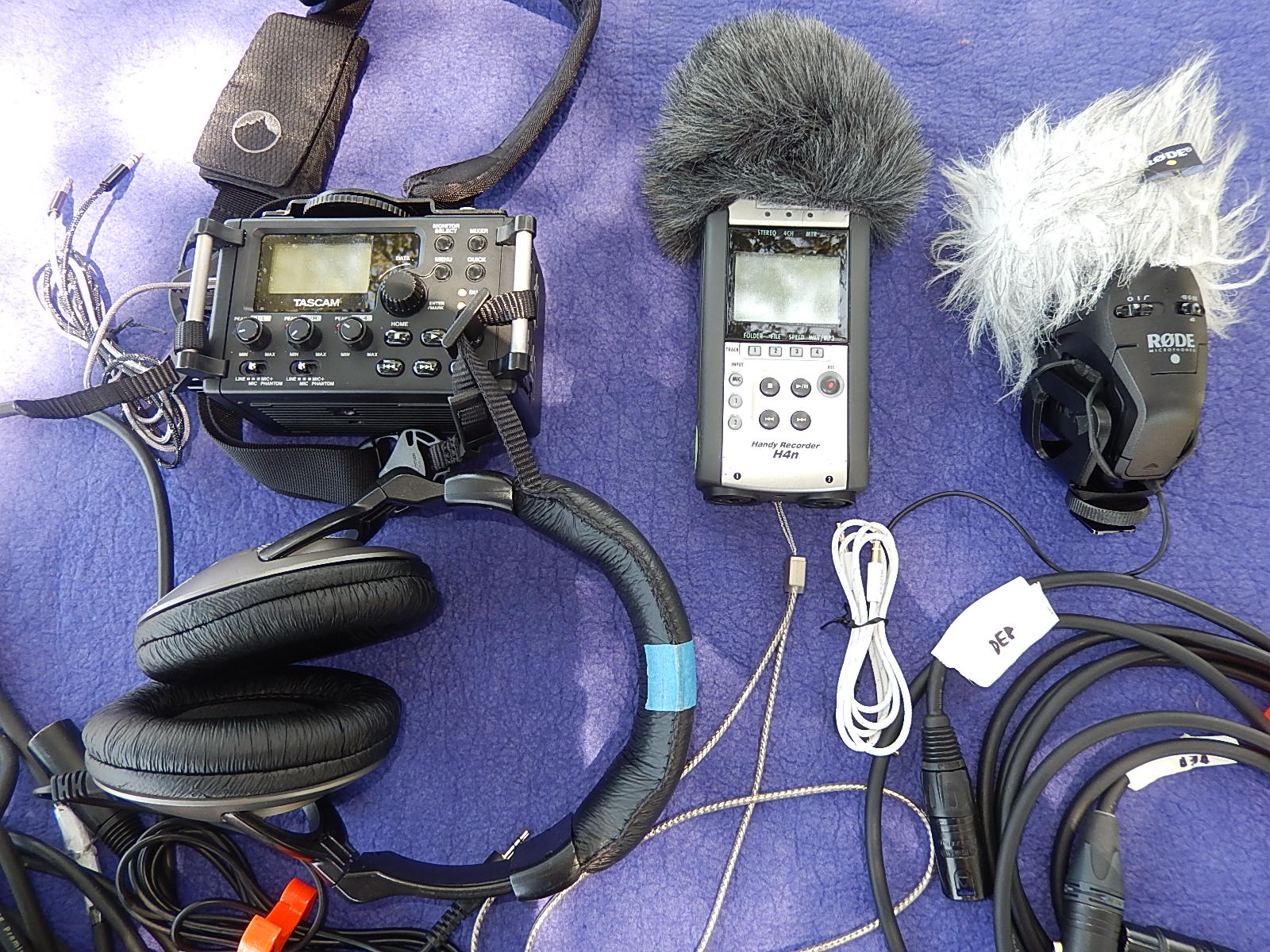
These are some of the items I use to create audio recordings for AV projects.

2 digital audio recorders: Tascam DR-60D (general production) and Zoom H4N (music, overdubbing; direct recording via XY stereo mics)

2 sets of headphones: Tascam and AudioTechnica (AT)

Rode Stereo Video Mic Pro, mainly for environmental sound and music

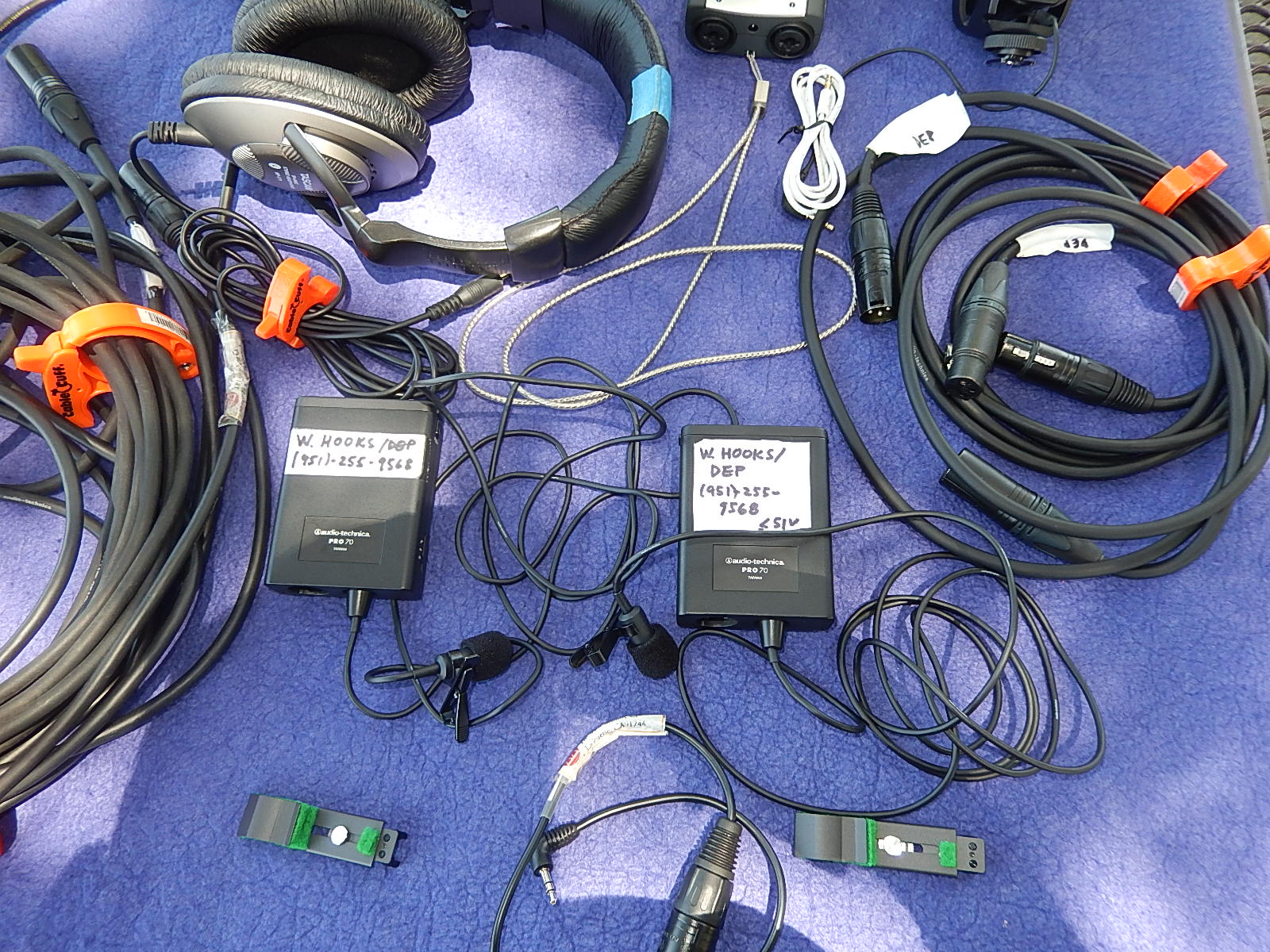
2 pair each of several types of dialog/mono microphones: AudioTechnica Pro70 wired, cardioid condenser lavaliers; also AT 88W wireless, omni dynamicTascam DR-60D and Zoom H4N

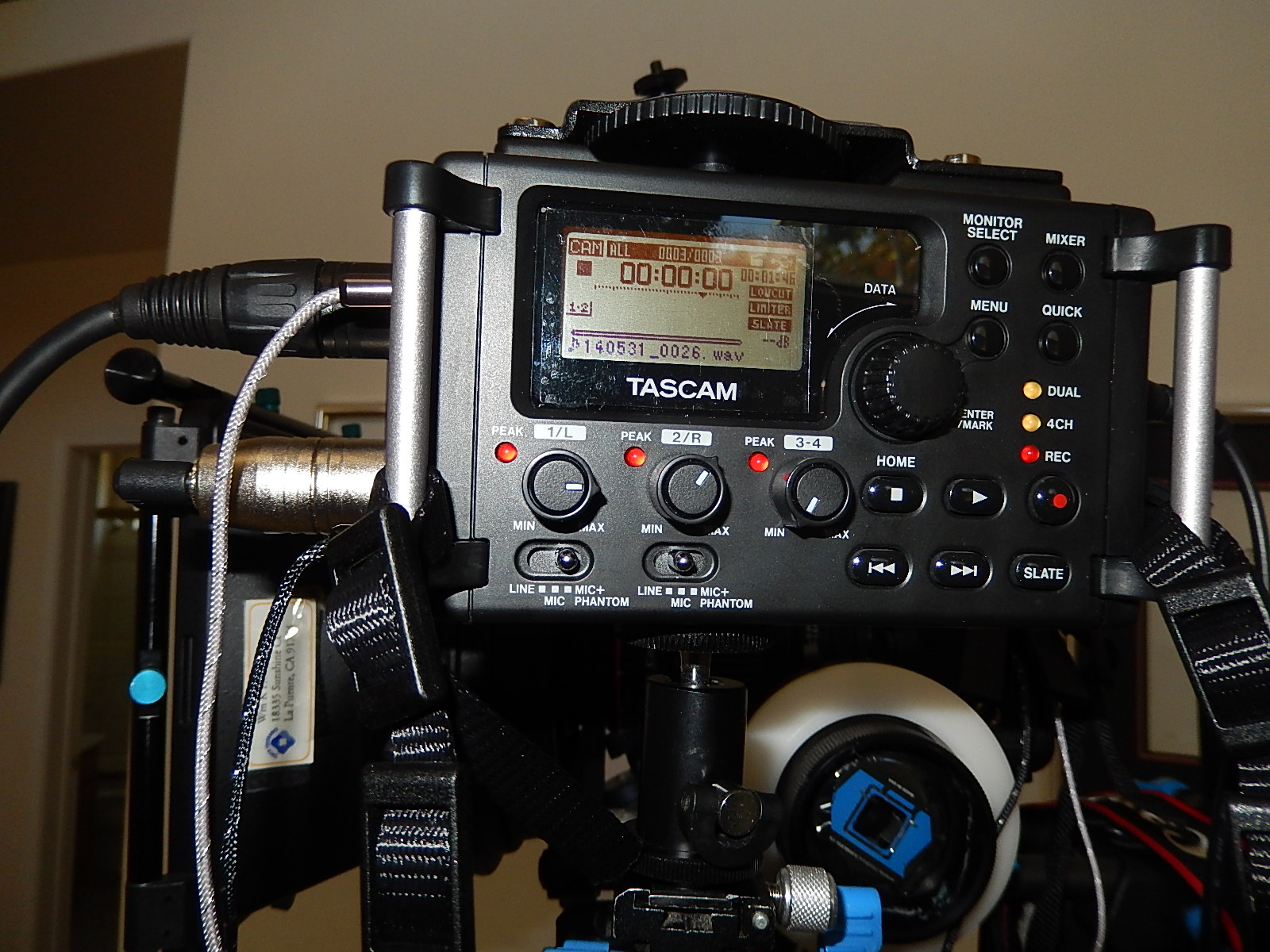
Tascam DR-60D DAR

2 AT Pro 70 wired lav mics

AT Pro 70 x 2 with XLR cables lavaliers and Rode NTG-2 supercardioid, condenser shotguns (not shown here)

Not shown is the AT 8004L dynamic omnidirectional stick mic, used mainly for ENG in-frame

The Pro70’s are also good for guitar recording via the specialized holders, shown with green felt liners in the corresponding images.

The four heads

Posted in Music, Photography, Photojournalism, Reviews, Travel, Video with tags , , , on June 8, 2014 by William Hooks

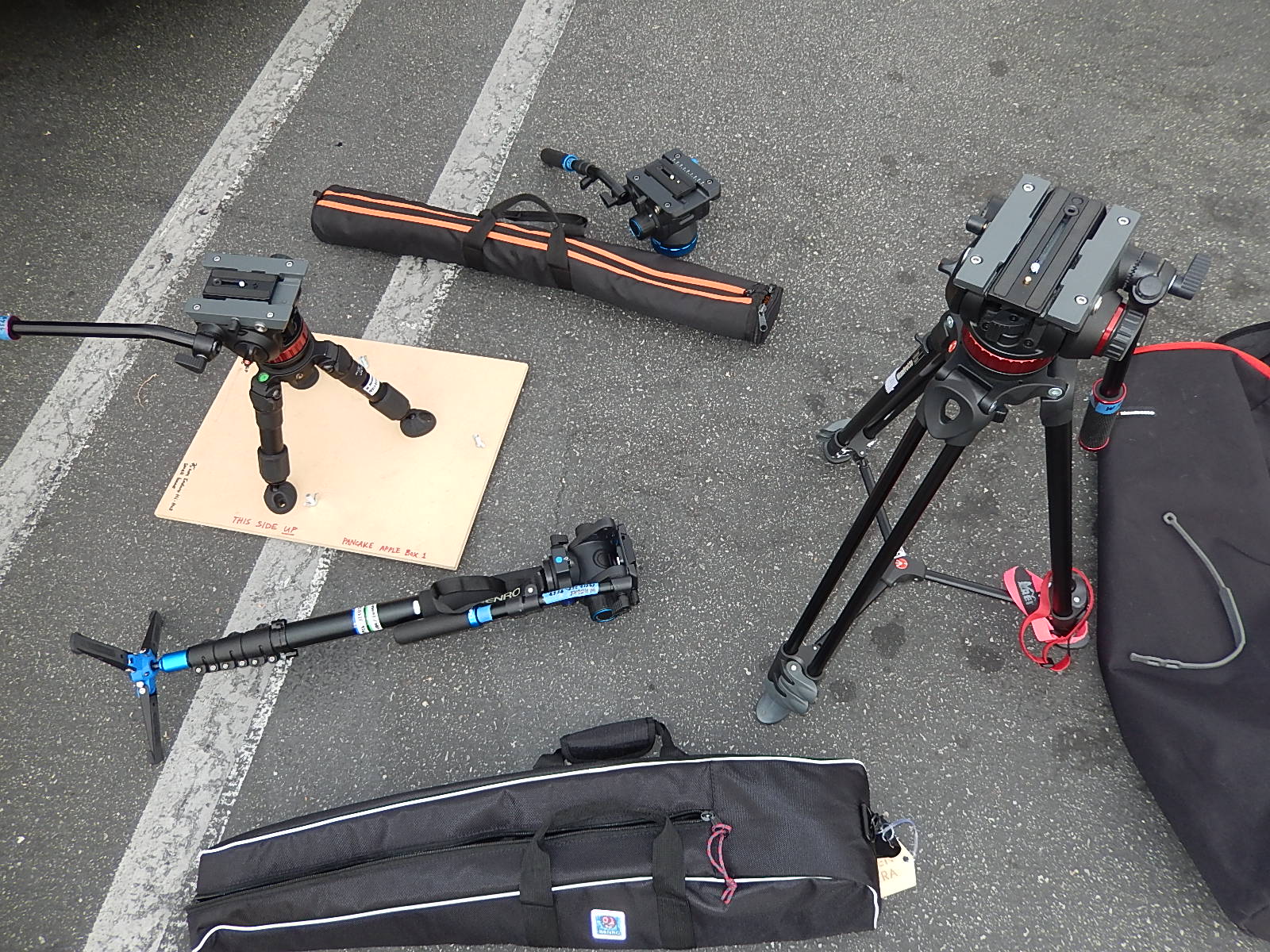
This is an illustration of the 4 fluid heads and associated equipment I use for video stabilization.

The Induro hi-hat yields low-angle and tight interior shots, for example; the monopod can provide sweeping ‘jib’ shots and the tripod specializes for Dutch angles. All contribute to multicam shooting.


The heads from Benro are S6 on monopod, and S8 flat base.

This combination travels well and all heads use interchangeable, standard quick release plates.4 fluid heads_ motion options

The 75mm bowls on the Manfrotto video tripod and hi-hat allow seamless transfer between their respective heads.

So what? This combination is FAST and secure to use.That means I have more time to be creative and waste a lot less time and effort switching cameras for obtaining specific shots!

Initial review of the Tascam DR-60D Digital Audio Recorder

Posted in Captain's Personal Log, Music, Photojournalism, Reviews, Travel, Video with tags , , , , on May 31, 2014 by William Hooks
Detail of link to recorder from rig
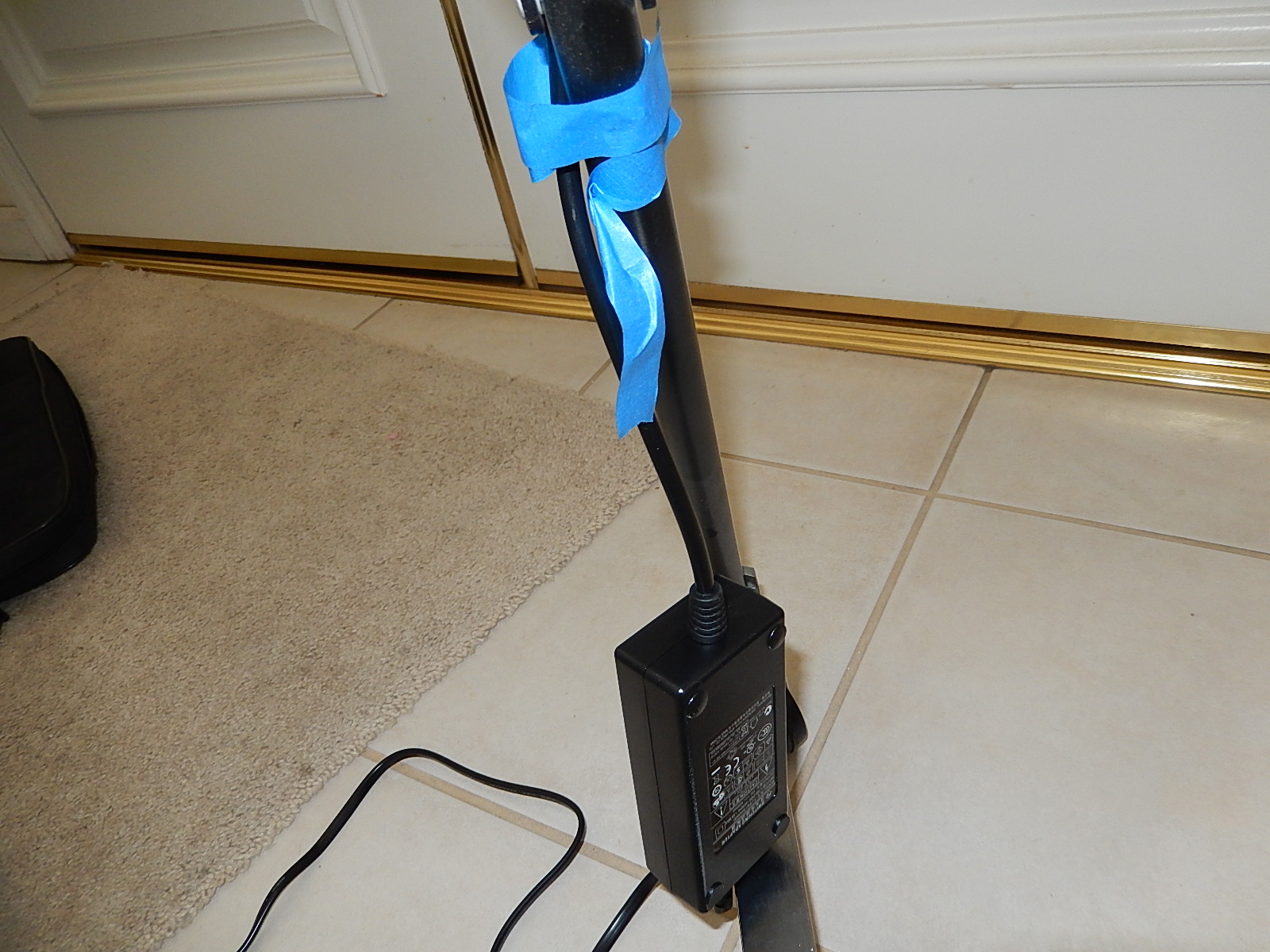
Be careful to secure the electric cables so that no tension is placed on them!

Be careful to secure the electric cables so that no tension is placed on them!

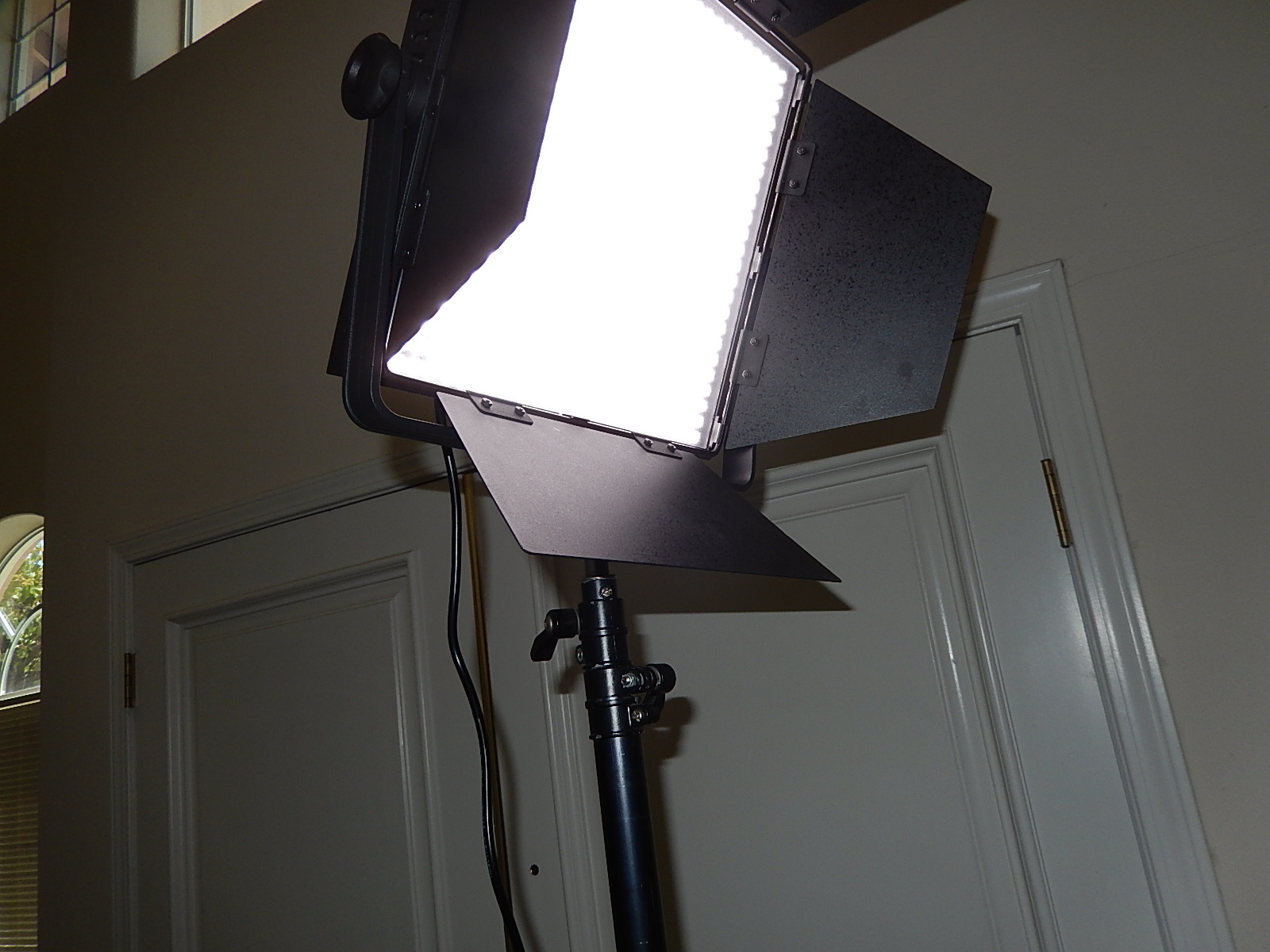
Ledgo 600 LED light panel

Ledgo 600 LED light panel

I like to be able to easily detach the carrying strap using the plastic snap buckles, for rig placement- or leaving it attached for use as a field mixer

I like to be able to easily detach the carrying strap using the plastic snap buckles, for rig placement- or leaving it attached for use as a field mixer

DSCN0681

shows the headphone out cable  (above), and USB AC adapter cable (below)

shows the headphone out cable (above), and USB AC adapter cable (below)

DSCN0684

DSCN0685

DSCN0686

DSCN0688

DSCN0689

I’ve been using this unit alone so far, not integrating with the Zoom H4N using the latter as an XY stereo microphone input, and with the Canon 5D Mark III camera which has a headphone jack. This jack has been used as a camera-out jack to connect to the DR-60’s CAMERA IN jack, allowing very intuitive and excellent review of the mixed audio files sent to the 5D3 from each take while reviewing the corresponding video clips. 

This feature, internal adjustable audio slating and the highly sensitive pre-amps have already made the Tascam my primary recorder for documentary and narrative film production (EFP). 

The large number of buttons make diving into menus much less frequent. A very important issue is the ability of this unit to independently assign phantom power to microphones- so that I can revert to a preferred setup of a powered Rode NTG-2 shotgun while mixing with other mics which do not need phantom power or might even be damaged by it.

The XLR inputs are locking type and access to the SD media card is very easy- both upgrades from the Zoom H4N.

Yet another much-appreciated feature is the automatic revert-to-MIX monitoring when switching from listening to the camera’s files to resuming recording- a real timesaver, as you don’t end up having to possibly redo the take because the DR-60 was still on CAMERA IN monitoring!!!

I do wish that the buttons were backlit for low light, but consider that a minor issue.

For conservation of battery power, I obtained an AC adapter easily (driving directly to the warehouse in Carson, CA) and it appears to function very well so far.

I would usually default to the H4N for field location scouting, recording at lecture settings and routine note-taking / EFP simply because of its XY microphones. Either may be used for travel because of their compact, lightweight form factors.

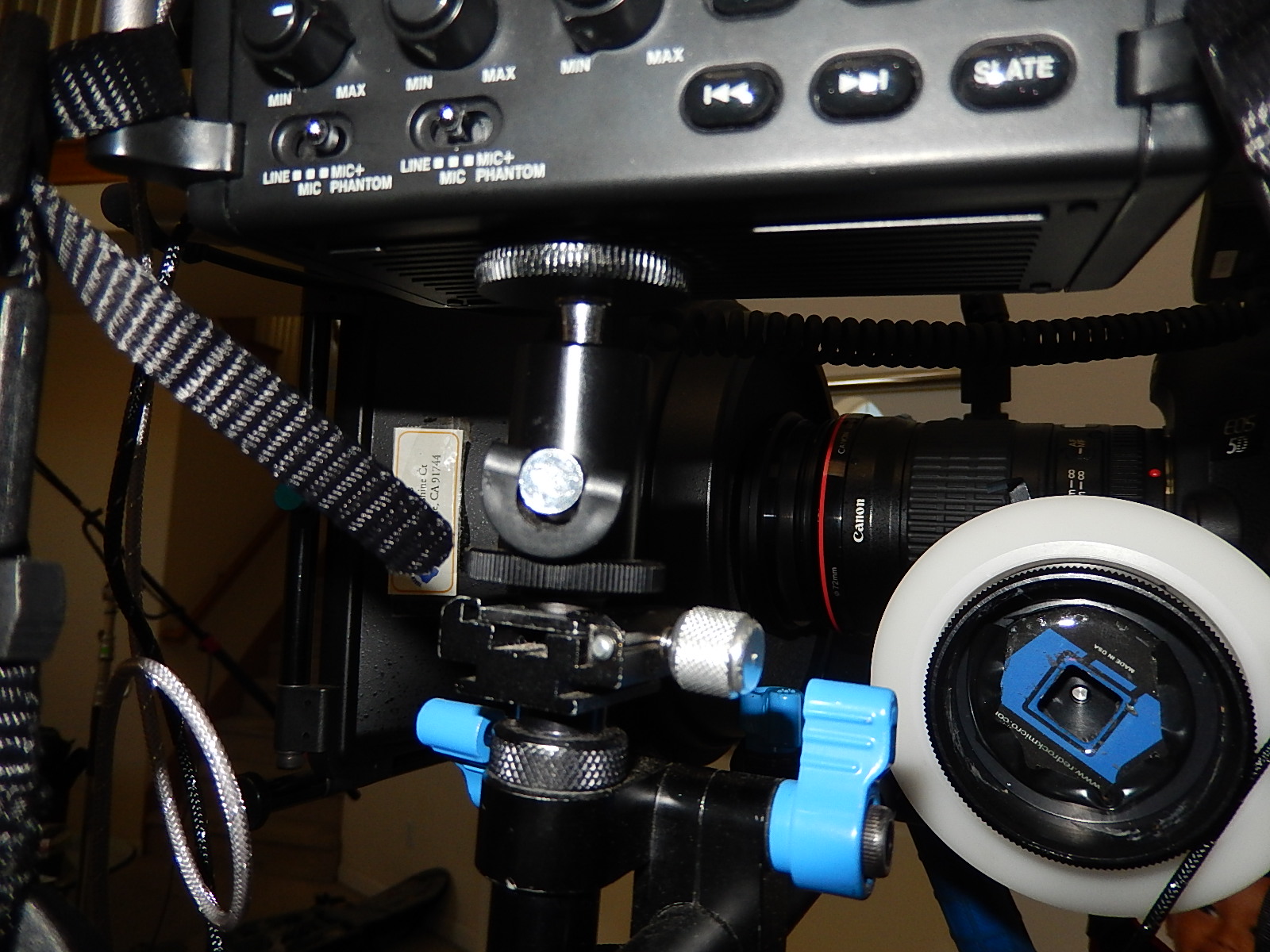
The images included show the DR-60 on a RedRock Micro Cinema rig with Canon 5D3, 135mm f/2 L lens, Rode NTG-2 shotgun and Audio Technica 88W wireless lav microphones; the wireless receiver is on the camera’s hot shoe. My atrium definitely needs to be cleaned up-soon….

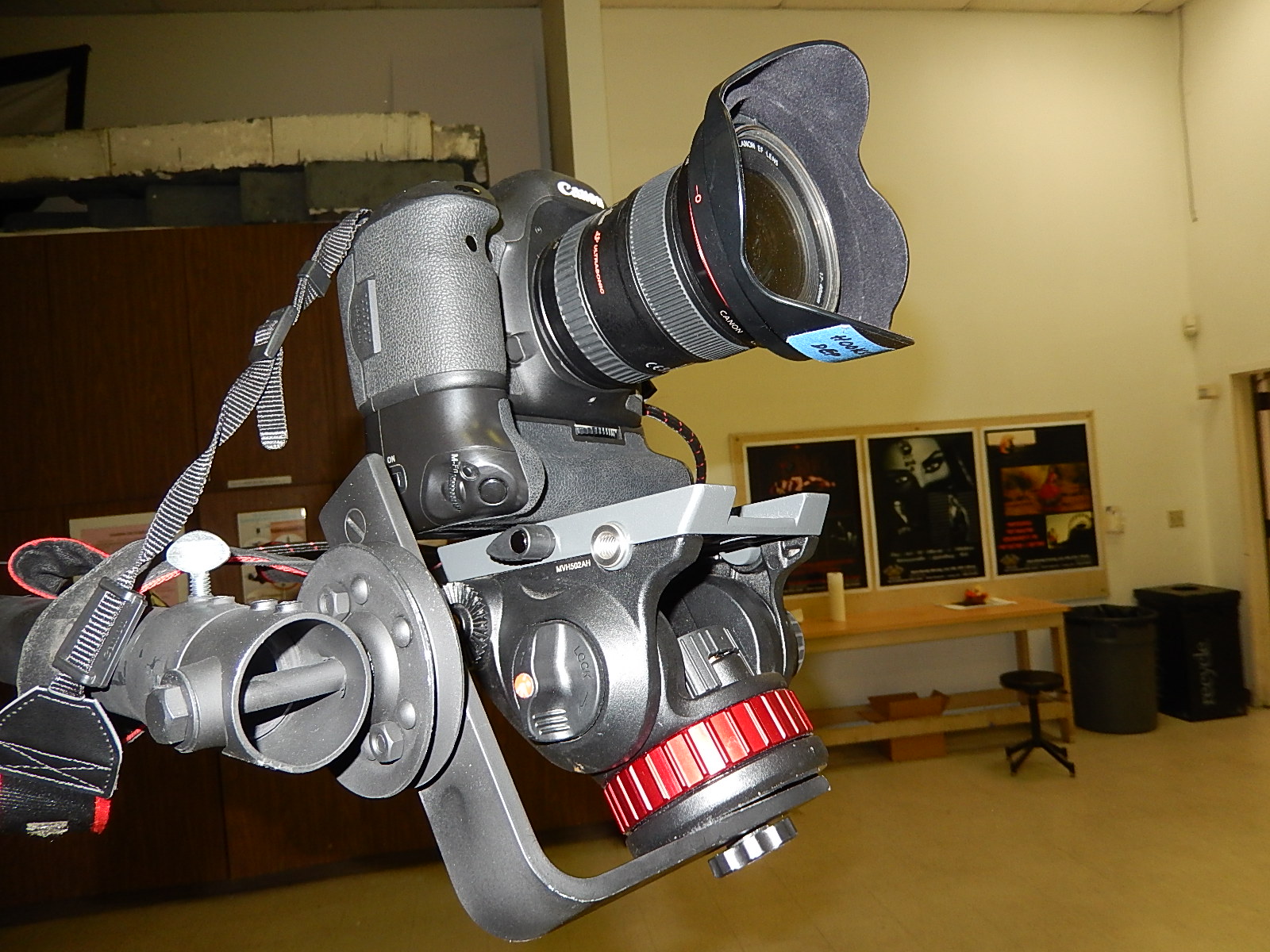
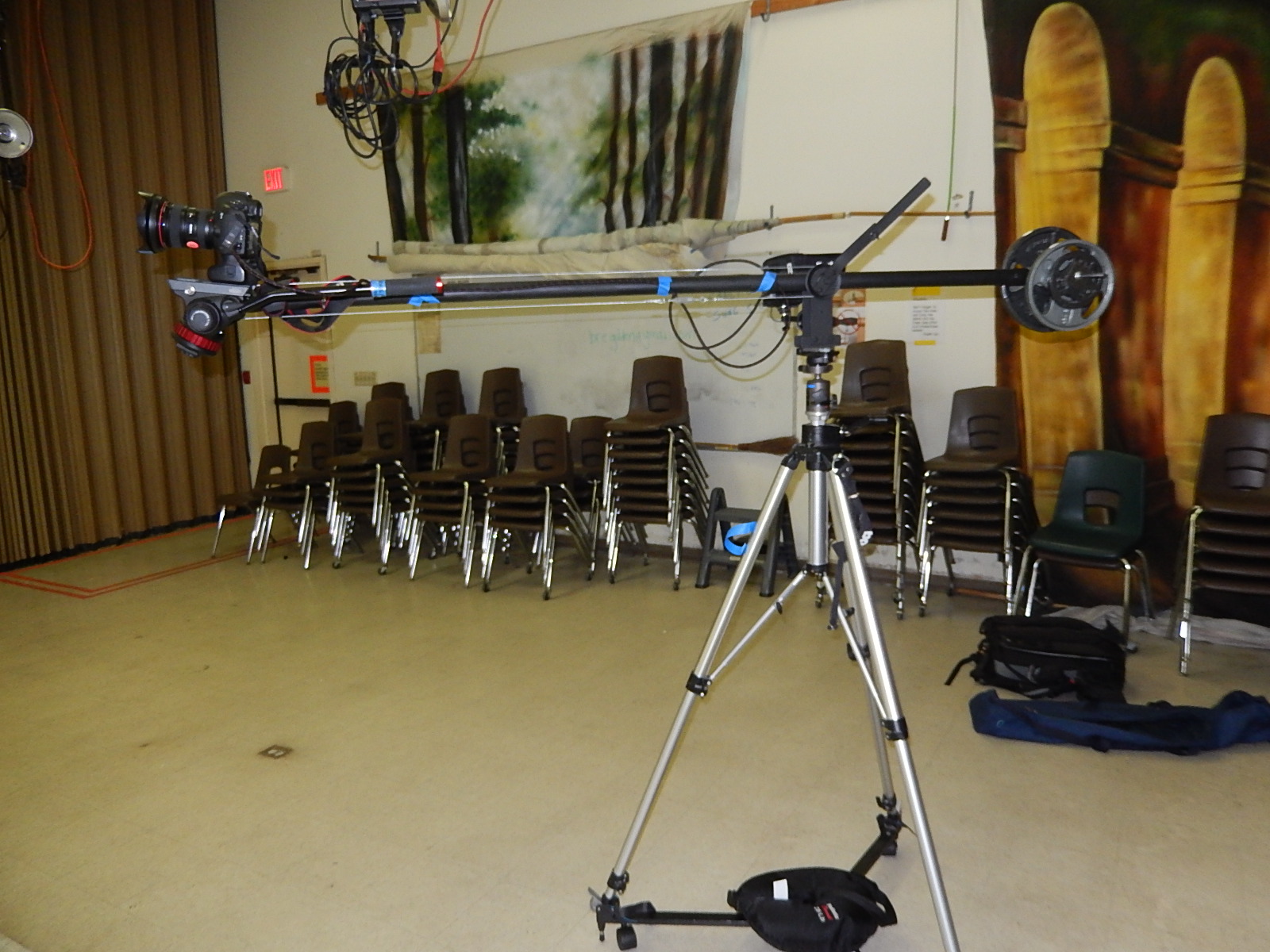
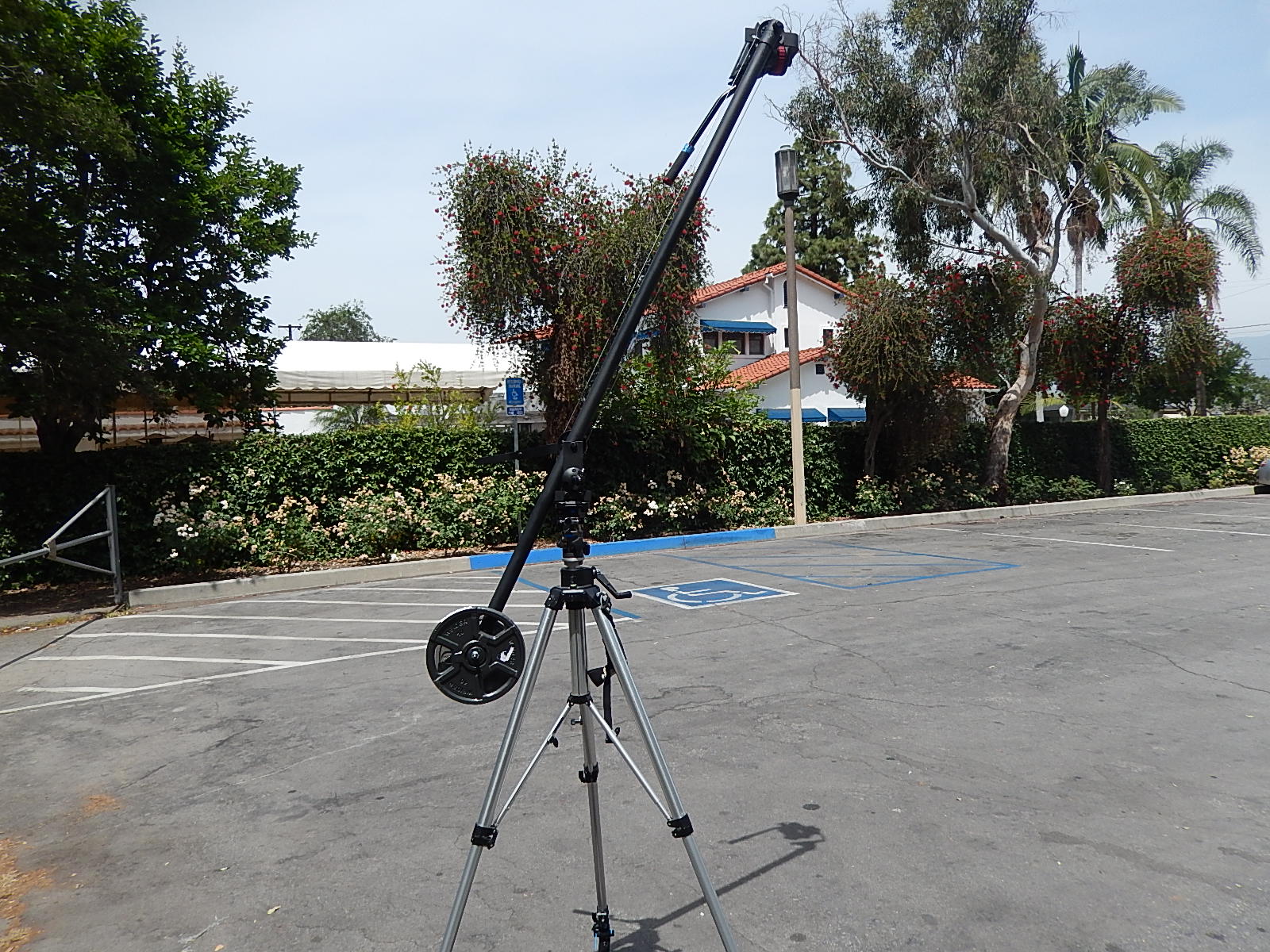
New custom 6 ft jib /mini-crane

Posted in Photography, Travel, Video on May 5, 2014 by William Hooks

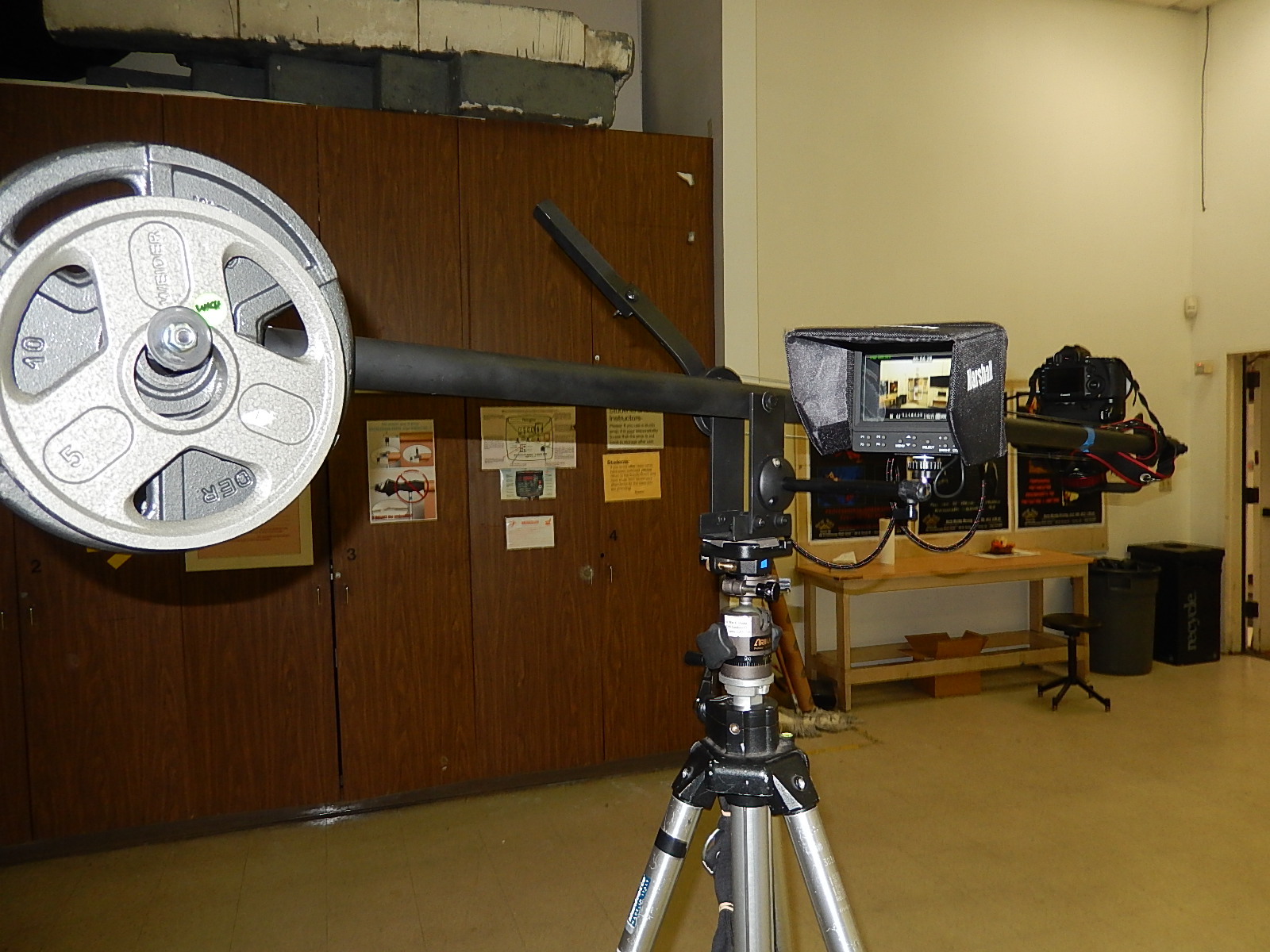
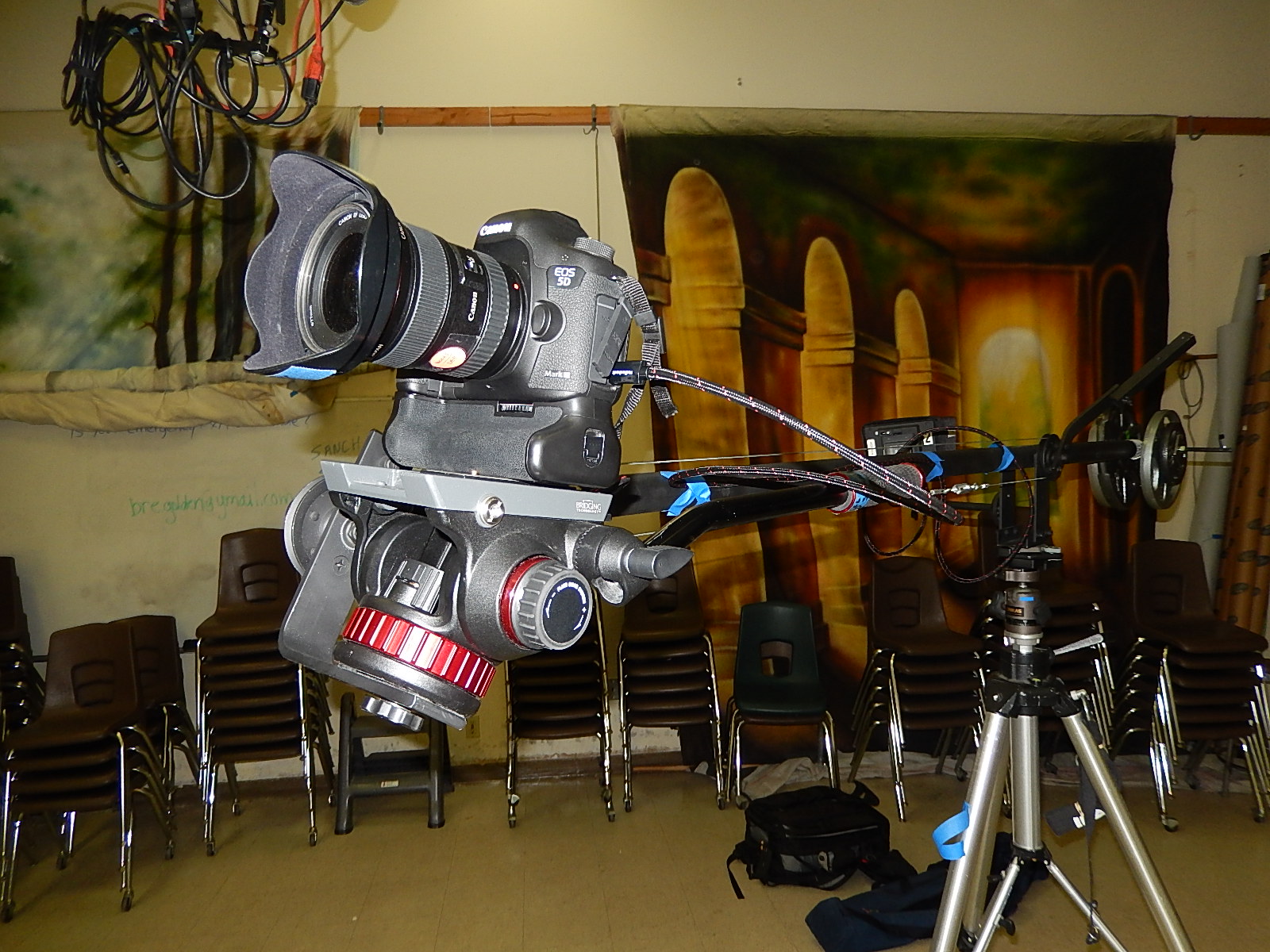
I’m using a Manfrotto flat-base fluid head as the default to mount cameras on the jib. To shoot simultaneously with 2 cameras, I use a Manfrotto dual camera arm.

For focus, the Manfrotto DSLR remote controller works well esp with the wonderful AF system on the Canon 70D…5″ HDMI monitor is used for display and exposure estimation for the operator at the counterweight position, also using a lever to move the camera perpendicular to the long axis of the jib if needed.

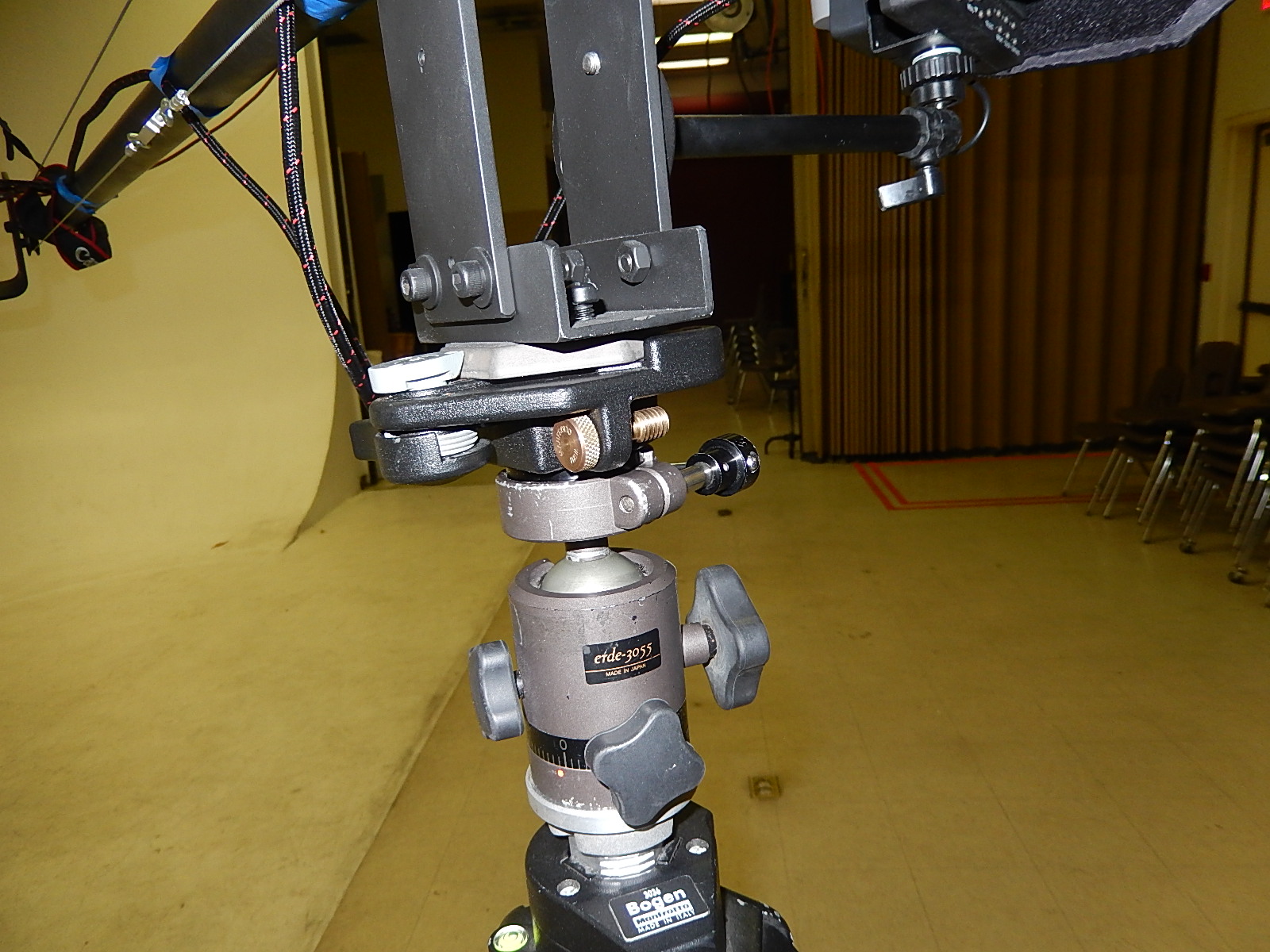
A 25 pound donut sandbag stabilized the tripod, attached to an Arukas ball head and then Manfrotto hexagonal camera plate system integral to the jib mount. With a 5D3 and 17-40mm f/4 I find that about 15 pounds on the right and 7.5 on the left arm of the counterweight bolt work well.

Arukas ball head with jib mount

counterweights_ jib monitor

jib camera payload

jib payload detail

travel jib in studio

DSCN0593

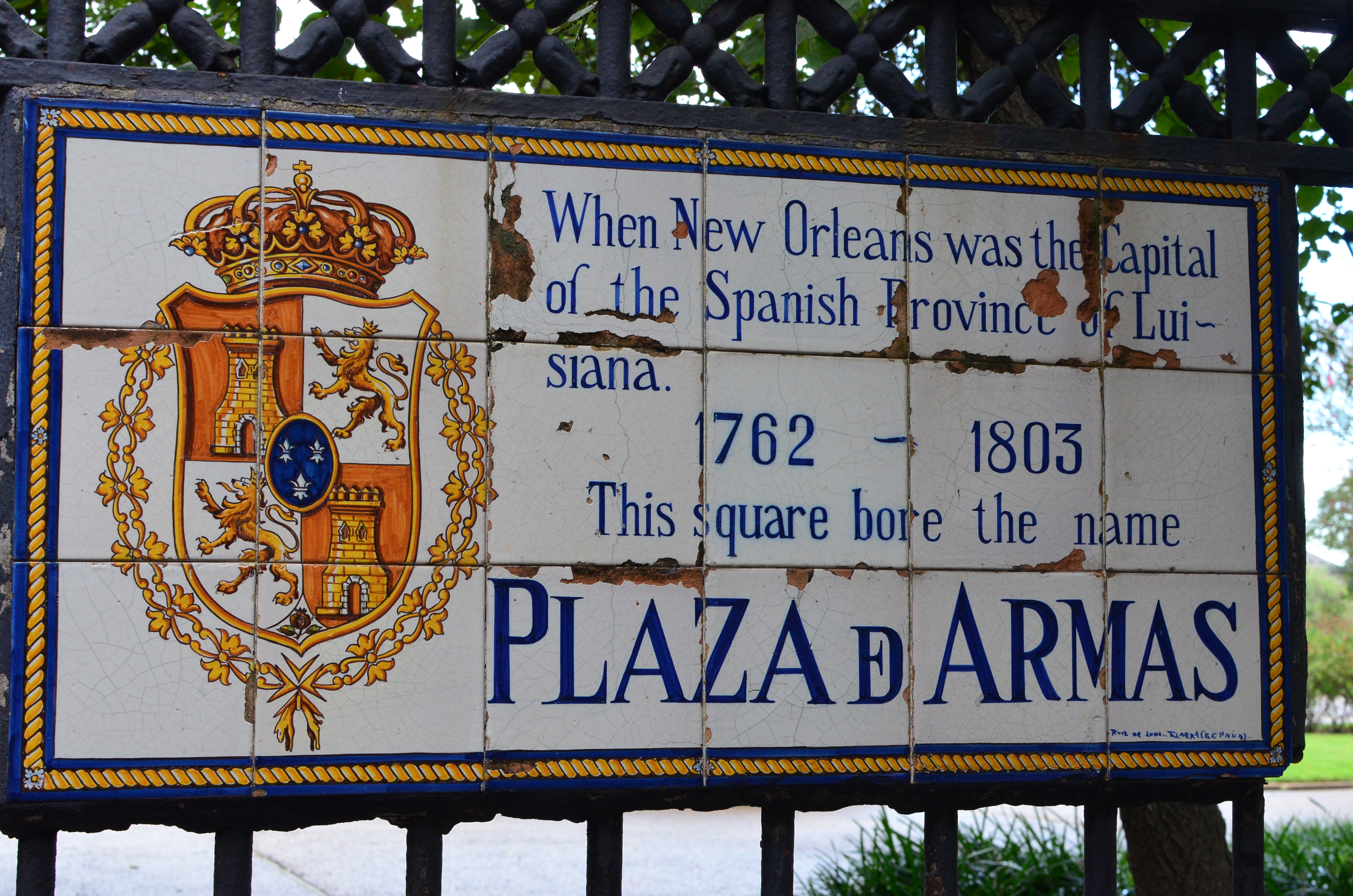
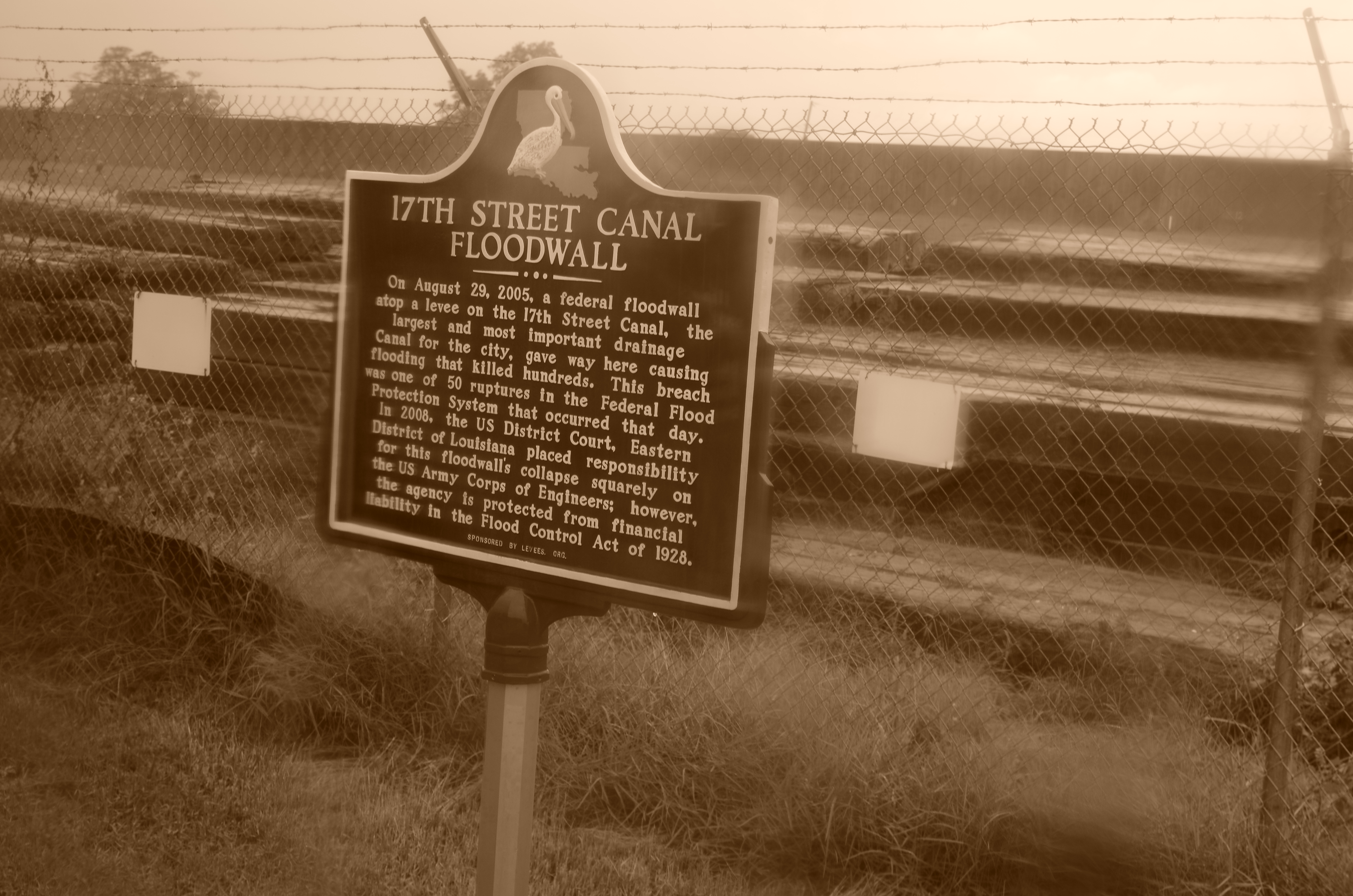
Completing the prologue to an upcoming documentary, KATRINA TO LANDERS:Random relocation of African American Refugees from the hurricane disaster in 2005

Posted in Music, Photography, Photojournalism, Travel, Video on March 28, 2014 by William Hooks

New Orleans_2011 09 22_0087

New Orleans_2011 09 22_0089

New Orleans_2011 09 22_0097

New Orleans_2011 09 22_0098

New Orleans_2011 09 22_0099

New Orleans_2011 09 22_0100

What has worked well for me in the mountains over the years

Posted in Reviews, Travel on December 13, 2013 by William Hooks

My winter 2013-14 Alpine mountaineering favored equipment- choose from these options….
STOVES: MSR Reactor, MSR Windpro II, Bibler (canister); MSR XGK-EX (liquid fuel)
CLOTHING: Mountain Hardwear, Arc’teryx, Marmot, REI/ Smartwool and Icebreaker base layers; Outdoor Research Crocodile gaiters, Expedition Modular Mitts and gloves
SLEEPING BAGS: Western Mountaineering Antelope +5 F , Puma -25 F (SMF versions)
PACKS: Black Diamond [BD]Predator 50/ Quantum 65; Wild Things Freney; Arc’teryx Bora 80/95, Cierzo 35
BOOTS: La Sportiva Baturas/ Trango Evo GTX; Raichle GTX
TENTS: Black Diamond superlights, especially Firstlight/ Megalite; The North Face Mountain 25/ Assault 22
SNOW SAW: Yang Fang
SHOVEL: BD (curved shaft)
ICE TOOLS: Petzl Aztars; BD Venoms, 50cm and 57 cm pairs
ICE AXES: BD Raven and Raven Pro
CRAMPONS: Grivel especially New-Matics, BD stainless steel Sabretooths
ROPES: Edelrid Discovery 8mm x 30 m twins; Sterling Nano 9.2mm single (2014?); Petzl Fuse 9.4mm x 60, 70m singles; Mammut 9mm x50m doubles; 6mm cord for full-length rappels with single ropes
BELAY-RAPPEL DEVICES: Petzl Reverso 4, BD ATC_Guide
HARNESSES: BD Couloir, Petzl Adjama
SLINGS: Mammut sewn Spectra; various other sewn and nylon types
HEADLAMP: BD Icon
HELMET: Petzl Meteor 3
BIV SACK: Wild Things Big Wall w spectra tie-in; REI Minimalist
ROCK PROTECTION: BD Camalot C4’s, Wild Country Superlight Rocks, Omega Pacific Link Cams; Hugh Banner Offset nuts; Lowe Tricams; WC offset Tech Friends; BD pitons
SNOW PICKETS: MSR
ICE PROTECTION: Abalakov system; Petzl Laser ice screws; BD Spectre ice hooks

These days, I use the Nikon Coolpix S9100 and Canon 5D Mark III for photography and video.

Tips for alpine mountaineering and winter snow camping

Posted in Photography, Reviews, Travel, Video on December 13, 2013 by William Hooks

Please also see my updated equipment lists for 3-season and winter trips, on a separate page….

Having just returned from an outing to Joshua Tree National Park, CA in true desert winter conditions, I’m reminded of the following gained from experience:

-If you aren’t ABSOLUTELY sure that your equipment is correctly assembled and in working order, it’s a good idea to go through a detailed checklist befo’ leaving. CHECK BATTERIES.

-Start keeping track of what really works well FOR YOU, and what is nonessential, and re-evaluate after each trip using a spreadsheet. I like Microsoft Excel. If you like, import or download one of many free templates online.

-Trend toward what you feel is very reliable, simple equipment which translates into speed of use. This is really important with stove systems, rock and ice gear, and rope management in particular. The best system for creating multiple liters of hot water in the least amount of time is worth a lot of consideration in the winter, so you must titrate what you take in view of anticipated weather conditions.

-Practice using your sleeping bag/s until you’ve mastered all of the features needed to keep you comfortable. I know that doing that with my winter bags has been especially helpful, because in that environment it’s crucial to get quality rest.

– Do not neglect carrying basic first aid materials, again especially in winter (sharp tools, crampons, remote areas,……………………….)What I recommend is to be very frank with yourself about your health status, and the potential consequences of a bleeding injury or head injury in a remote area. Example: I have had 2 kidney stones in the past. I take special precautions against dehydration, but have not required any medication; this clearly relates to what I mentioned earlier about being able to generate adequate amounts of water.

-LEARN from not only your personal experience, but that of others. It’s often easy to find online. Dedicate yoursef’ to modifying or discarding how you’ve been doing things in light of new information or experience– that’s just being intelligent.

-Never forget these things: Alpinism is the art of suffering. And try to actually have fun. I know- it doesn’t make sense, but that’s what my mother has been telling me for my entire adult life.

Followup review of the Canon 5D Mark III

Posted in Photography, Photojournalism, Reviews, Studio Portraiture, Travel, Video on November 23, 2013 by William Hooks

What do I NOT like about the 5D3/ Canon DSLR systems?

– No crop mode such as DX/ FX (Nikon got this RIGHT)
– No highly compressed 1080p/24 to reduce file sizes..NO 1080p/60!!!!
– No XLR inputs**
– Much more difficult to achieve ‘image overlay’ process in-camera (again, Nikon got this right)
– No built-in intervalometer (Please take a tip from Nikon??)
– Overheating during some longer video recordings**
– Beep mode is too quiet to be useful in a number of situations, especially outdoors
– (Overly)complex AF system
– Canon super telephotos tend to be much more expensive than Nikon counterparts
– No recording of an StdDef-quality vid version on a second card, for output to DVD/web**
– No ND filters built in ** (I’m reaching here….)

I prefer to use Nikons for photography and Canons for video… YMMV.

** these and other issues are well addressed by the Canon EOS Cinema camera line.

My (borrowed) editorial comment on the core issue of climate change

Posted in Captain's Personal Log, Photojournalism, Travel on November 14, 2013 by William Hooks

a href=”http://www.huffingtonpost.com/2013/11/13/typhoon-haiyan-climate-change_n_4269640.html?1384446743″>
<img sr